

When The Boondocks first appeared as a newspaper comic strip in the late 1990s, few could have predicted the cultural force it would become. What began as a politically charged, visually simple piece of satire nestled between daily horoscopes and syndicated jokes soon transformed into one of the most provocative animated series in television history. The journey from page to screen was not only a technical evolution but a reflection of shifting generational attitudes, evolving conversations about race, and the emergence of a bold new form of Black storytelling. As a cartoon, The Boondocks expanded the boundaries of animation by taking on topics that even live-action series often avoided. Its impact continues to echo through entertainment, politics, and online culture, cementing its status as a cult classic.
Origins in Print and the Spark of a Radical Voice
Aaron McGruder’s comic strip debuted in 1996 on The Diamondback, the student newspaper at the University of Maryland. It quickly gained a following for its witty critique of American life, viewed through the eyes of two young Black boys who had been uprooted from their urban Chicago community and placed in an overwhelmingly white suburb. The heart of the strip—Huey’s intellectual militancy and Riley’s rebellious bravado—formed a dynamic that was both humorous and deeply revealing of the dualities within Black youth identity.
By the time the strip was picked up nationally by Universal Press Syndicate, The Boondocks had become a distinct and unapologetic political voice in mainstream media. McGruder took on everything from presidential elections to hip-hop culture, and readers either adored or detested the strip because it refused to dilute its message. Even on paper, the comic felt like a spark waiting to ignite something larger. That spark eventually became the animated series, where the satire could expand beyond text and static panels into a full-blown cultural critique with sound, motion, and unparalleled boldness.
The Transition to Television and the Birth of a Cult Sensation
When The Boondocks premiered on Adult Swim in 2005, it arrived at a time when animated shows like The Simpsons, Family Guy, and South Park dominated adult-oriented animation. Yet none of them approached race, politics, and Black culture with the ferocity and introspection that McGruder brought to the table. Turning the comic into a cartoon allowed The Boondocks to amplify everything that made the strip powerful. Huey’s speeches became full monologues. Riley’s antics became kinetic, visually chaotic expressions of rebellion. Granddad, a character who provided comedic grounding in the strip, found new life as an energetic, flawed patriarch struggling to manage the generational conflicts exploding around him.
Animation gave McGruder the freedom to push boundaries in ways that traditional sitcoms never could. The exaggerated expressions, intricate fight scenes, and lovingly crafted anime-inspired sequences elevated the show’s visual identity. The cartoon format wasn’t just a stylistic choice; it was a vessel that made radical ideas palatable through humor, action, and artistry. The show’s iconic opening sequence alone—the silhouettes of Huey and Riley against a backdrop of weaponized metaphors and philosophical narration—signaled that this was not just entertainment. It was a cultural statement.
Characters Who Became Cultural Symbols
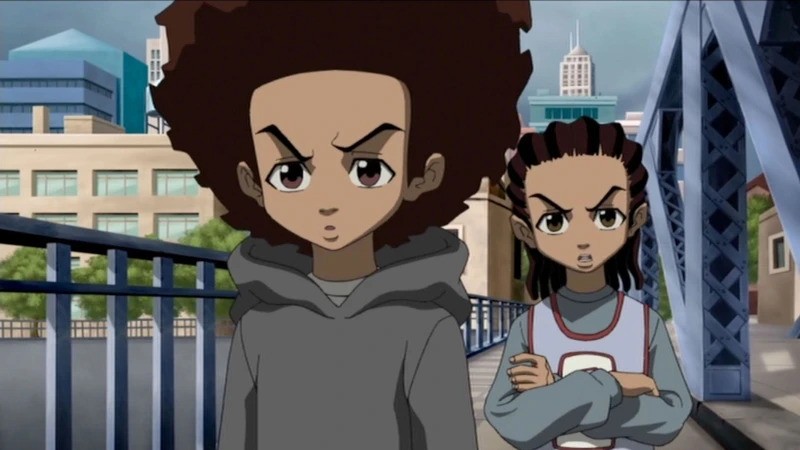
Part of the cartoon’s enduring impact comes from its unforgettable cast. Huey Freeman, named after Black Panther co-founder Huey P. Newton, quickly became a symbol of youthful political consciousness. In many ways, he represented a generation of socially aware young people who were questioning authority, media narratives, and the legacy of systemic racism. His seriousness contrasted sharply with Riley, who embodied the influence of hip-hop culture, materialism, and youthful bravado. Their relationship was not just comedic but reflective of the tensions within Black culture itself, particularly between activism and assimilation, rebellion and responsibility.
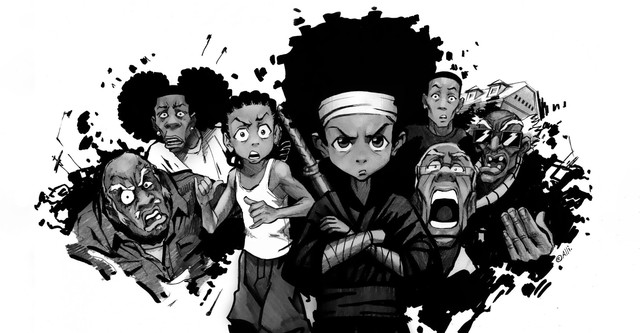
Then there was Granddad, the old-school pragmatist whose attempts to maintain a peaceful suburban life often clashed with his grandsons’ conflicting worldviews. Uncle Ruckus, with his skin-bleaching lotion and self-hating monologues, pushed satirical extremes so far that he became one of the most controversial characters in animation history. Despite the discomfort he provoked, he forced viewers to confront the ugly realities of internalized racism. These characters, whether beloved or hated, helped shape the show’s cultural identity. The cartoon didn’t ask its audience to agree with every perspective it presented; it demanded that they think critically about them.
Satire That Refused to Play It Safe
The cartoon format made it possible for The Boondocks to experiment with tone and pacing in ways the comic strip never could. Episodes ranged from adrenaline-fueled action parodies to emotional social commentaries. One week, viewers might find themselves laughing at a rap mogul who inherited everything except common sense; the next, they were grappling with a pointed takedown of media sensationalism or a chilling reflection on police brutality.
What made the show especially potent was its ability to balance satire with sincerity. The humor could be crude, absurd, or uproariously funny, but the underlying message was rarely anything less than serious. The show confronted issues like racial profiling, the commodification of Black culture, the failings of the justice system, and the moral contradictions of American politics. It treated the cartoon medium not as a limitation, but as a platform for exploring uncomfortable truths disguised as jokes.
Artistic Style and the Influence of Anime
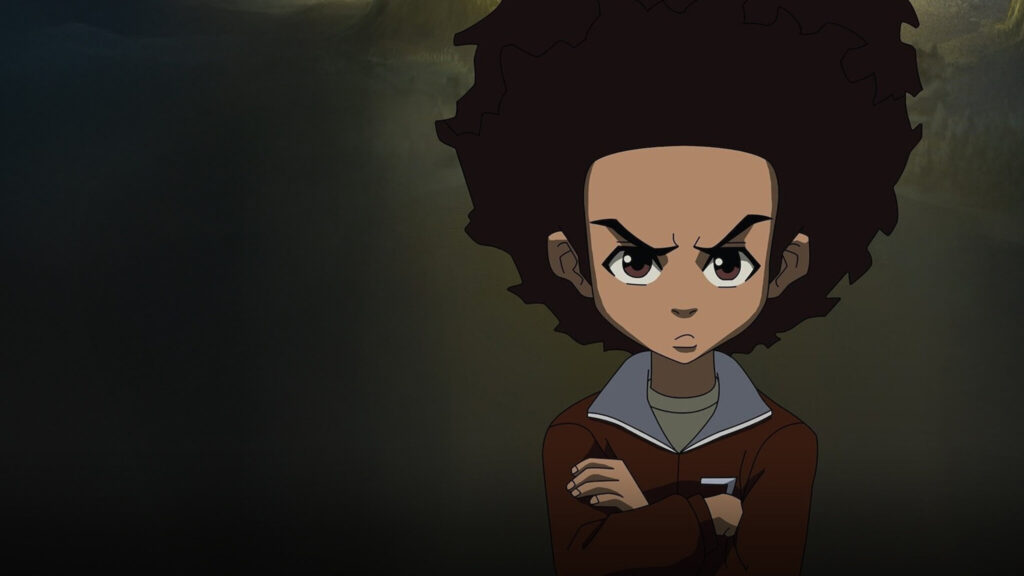
A distinguishing feature of The Boondocks was its anime-inspired animation style. Influences from series like Cowboy Bebop, Samurai Champloo, and Naruto were evident in its beautifully choreographed fight scenes, expressive character designs, and cinematic framing. This stylistic choice did more than enhance the cartoon’s visual appeal; it positioned The Boondocks as a bridge between African American culture and global animation traditions.
The meticulous attention to visual detail created an elevated sense of drama, even in comedic episodes. Whether it was Huey engaged in a Matrix-like battle or Riley reenacting a kung-fu movie, the animation reinforced the idea that this cartoon was not meant to be consumed passively. It invited viewers to appreciate the artistry while absorbing the commentary woven into every scene. The combination of sharp writing and stunning animation is a major reason the show maintains a devoted fanbase years after it stopped airing regularly.
Controversy, Censorship, and the Price of Radical Honesty
The Boondocks gained as much notoriety for its controversies as for its cultural insight. Several episodes were pulled or delayed due to their critiques of real-life public figures, media organizations, and political events. This censorship became part of the show’s legacy, highlighting how uncomfortable society becomes when satire hits too close to home. The cartoon’s willingness to address taboo subjects made it a lightning rod for debate about free speech and the role of comedy in social discourse.
Yet it was precisely this refusal to play it safe that won the show its cult following. Fans admired its unfiltered honesty, even when its perspectives were polarizing or harsh. It wasn’t a cartoon designed for comfort; it was designed for reflection. It pushed the limits of what animated television could do, proving that cartoons could be both artful and politically potent.
Cultural Legacy and Ongoing Relevance
Even years after its original run, The Boondocks remains an integral part of conversations about media representation and social criticism. Its clips circulate widely on social media, often resurfacing during times of political unrest or cultural controversy because the commentary still resonates. The show’s depiction of issues like racial injustice, exploitative celebrity culture, and media manipulation remains strikingly relevant. In some cases, episodes feel eerily predictive, as if McGruder saw the evolving landscape of American culture long before it unfolded.
The cartoon has influenced countless artists, writers, and content creators who see it as a blueprint for animated storytelling that doesn’t shy away from complexity. It opened the door for future series to tackle serious themes through comedy and animation. More importantly, it normalized the idea that cartoons could serve as vehicles for social critique without losing their entertainment value.
Why The Boondocks Endures as a Cult Classic
The reason The Boondocks continues to resonate is not simply because it was funny or controversial. It’s because it captured a specific cultural moment while remaining timeless in its examination of society. It blended humor, political commentary, and artistic innovation into something that felt genuinely new. The characters were exaggerated yet deeply human. The satire was pointed but rooted in love for the culture it critiqued. The show demanded engagement, not passive consumption.
As a cartoon, The Boondocks proved that animation could carry the weight of serious ideas without sacrificing creativity or emotional depth. It challenged viewers, questioned norms, and redefined the scope of what televised satire could achieve. That combination of artistic brilliance and cultural audacity is why the series shifted from newspaper comic to groundbreaking animated classic—and why its legacy continues to grow.