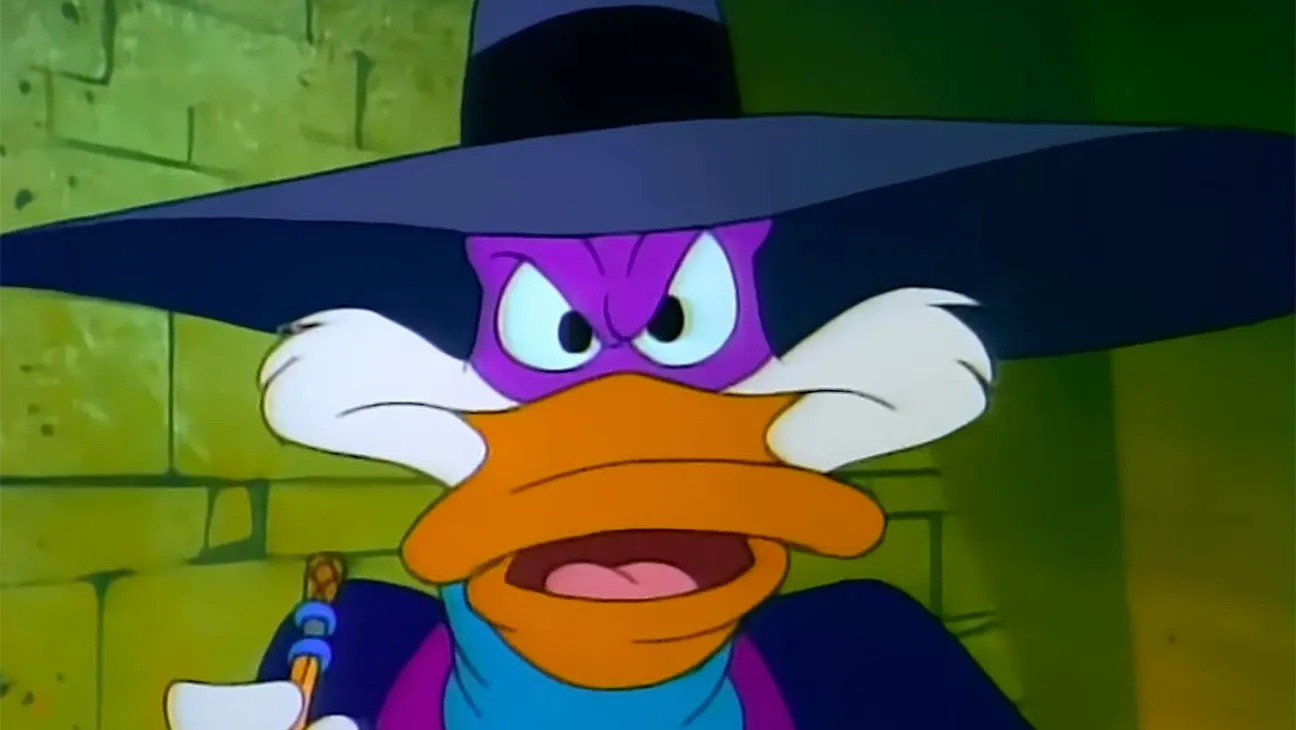
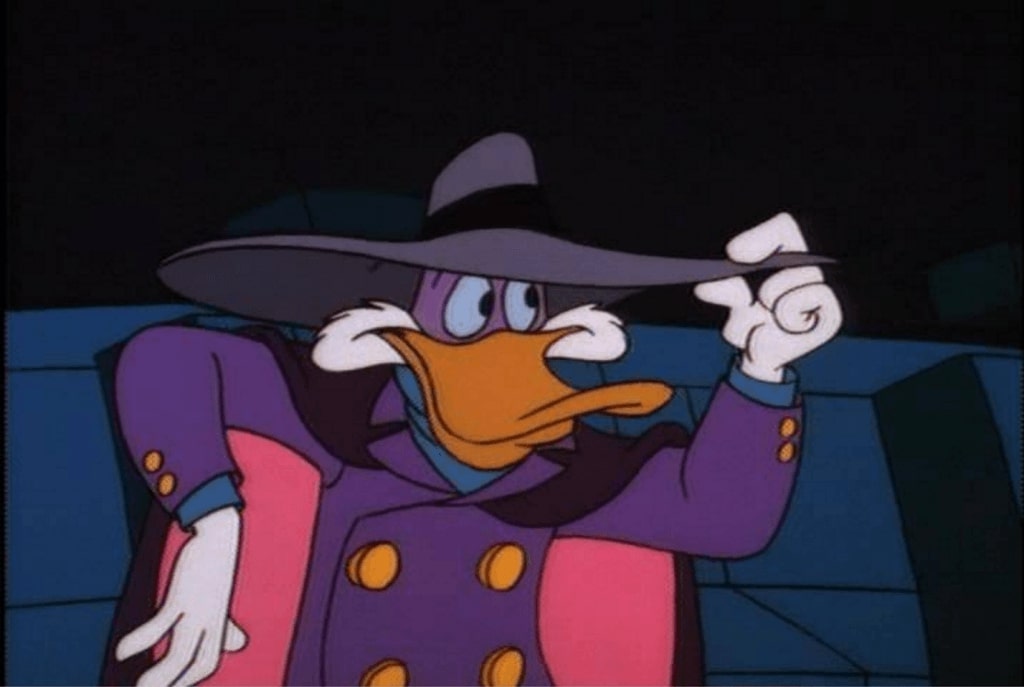
In the bustling landscape of 1990s animation, one duck stood caped and ready to save the day — or at least attempt to. Darkwing Duck, Disney’s crime-fighting parody hero, burst onto screens in 1991 and instantly quacked his way into the hearts of millions. With his dramatic flair, comedic misfires, and unforgettable catchphrase, “Let’s get dangerous!”, Darkwing wasn’t just another cartoon protagonist. He was a reflection of an era that loved both action and irony. His legacy endures not only as a beloved show from the Disney Afternoon lineup but as a cultural touchstone that redefined what a superhero cartoon could be.
The Birth of a Feathered Hero
In 1991, Darkwing Duck swooped into the Disney Afternoon block, a programming lineup already famous for hits like DuckTales, Chip ‘n Dale: Rescue Rangers, and TaleSpin. Created by Tad Stones and Alan Zaslove, the series was a bold experiment — a comedic superhero story wrapped in Disney charm. While DuckTales embraced treasure-hunting adventure and Rescue Rangers celebrated teamwork, Darkwing Duck focused on ego, chaos, and the hilarity that comes with both.
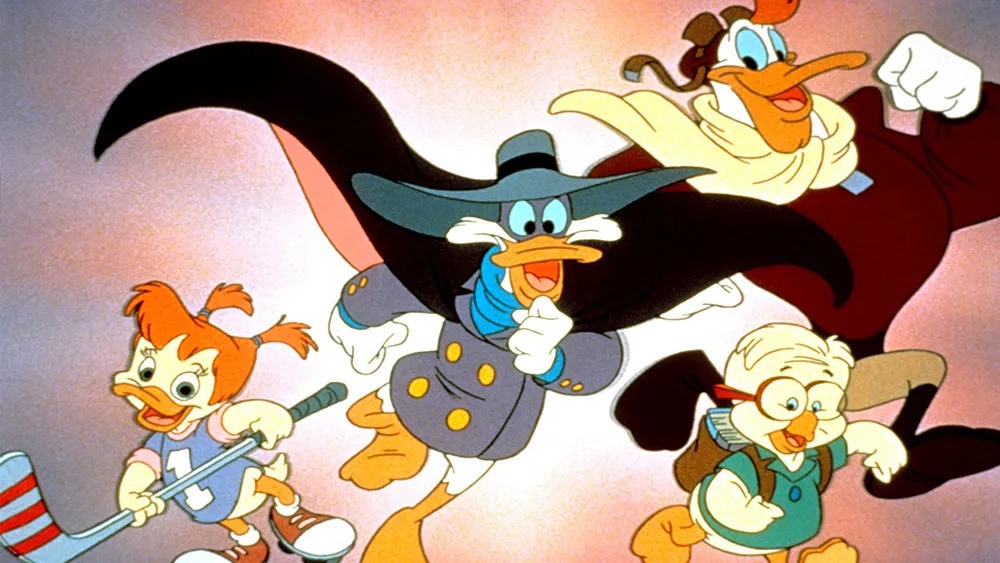
At its core, the show followed Drake Mallard, an ordinary duck with extraordinary ambitions. By night, he became Darkwing Duck, defender of the city of St. Canard. His mission? To fight crime and bask in glory — though not always in that order. Alongside his loyal pilot Launchpad McQuack (borrowed from DuckTales) and his adopted daughter Gosalyn, Darkwing fought an eccentric array of villains, each one more absurdly creative than the last.
The character of Darkwing was voiced by the incomparable Jim Cummings, whose range and energy brought the duck to life. Cummings’ performance oscillated effortlessly between bombastic bravado and self-deprecating humor. His voice became iconic, turning catchphrases like “Let’s get dangerous!” into rallying cries for fans and a symbol of animated confidence.
A Parody Wrapped in Heart
Unlike most superhero shows of its time, Darkwing Duck was as much a parody as it was an adventure. It lovingly mocked the genre it inhabited, pulling influence from Batman, The Shadow, The Green Hornet, and countless pulp heroes of the early 20th century. Darkwing’s gadgets often malfunctioned, his plans rarely went smoothly, and his ego was frequently his biggest enemy.
Yet beneath the satire lay genuine affection for the superhero archetype. The show didn’t simply ridicule caped crusaders — it celebrated them. Each episode balanced slapstick humor with moments of sincerity, often reminding viewers that even flawed heroes can do great things. Darkwing’s exaggerated confidence was endearing because it masked insecurity. He wasn’t perfect, and that made him relatable.
Moreover, his relationship with Gosalyn gave the show emotional depth. Gosalyn wasn’t the stereotypical sidekick; she was fierce, independent, and wildly adventurous. She constantly pushed her father to be better — not just as a hero, but as a person. Their bond provided a grounding emotional center that balanced the show’s comedic chaos.
Animation and Style: A World of Controlled Madness
Visually, Darkwing Duck stood out. It embraced a dark, shadowy aesthetic inspired by film noir, mixed with the colorful exaggeration of Saturday morning cartoons. The city of St. Canard felt like a playful parody of Gotham — filled with gothic architecture, moody skies, and absurdly over-the-top villains lurking in every corner.
The animation style, handled by Walt Disney Television Animation, was dynamic and expressive. Characters moved with cartoonish elasticity, yet scenes were framed with cinematic ambition. The show’s color palette shifted depending on tone — dark purples and blues for action sequences, bright oranges and yellows for comedic moments. The result was a show that felt alive, always visually engaging, and unmistakably unique within Disney’s lineup.
The musical score added to its energy. The theme song, performed by Jeff Pescetto and written by Steve Nelson and Thom Sharp, became one of the most recognizable TV themes of the decade. With its funky rhythm and irresistible hook — “When there’s trouble, you call DW!” — it set the tone for every episode: confident, exciting, and just a little ridiculous.
The Rogues’ Gallery: Comedy Meets Chaos
No hero is complete without memorable villains, and Darkwing Duck delivered some of the best in animated history. The show’s rogues’ gallery was as colorful as it was comedic, blending classic villain archetypes with absurd humor.
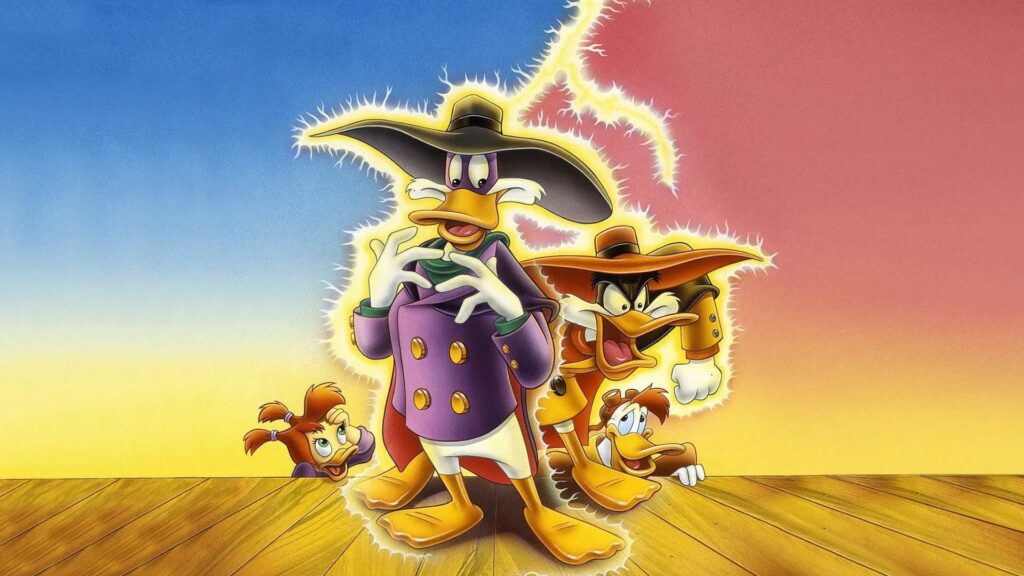
There was Negaduck, Darkwing’s evil doppelgänger and ultimate nemesis — everything Darkwing was, but crueler and more competent. Megavolt, voiced by Dan Castellaneta (the voice of Homer Simpson), was a manic electrician obsessed with bringing inanimate objects to life. Bushroot, a scientist-turned-plant hybrid, embodied tragicomic villainy, while Quackerjack, a deranged toymaker, represented chaos incarnate.
What made these villains shine was their balance of menace and humor. Each had enough personality to carry an episode, and their interactions with Darkwing were as much about witty banter as epic showdowns. These characters reflected the show’s spirit: ridiculous, unpredictable, and endlessly entertaining.
Humor and Heart: Striking the Perfect Balance
What kept Darkwing Duck from being just another slapstick superhero spoof was its balance between humor and heart. The comedy was often fast-paced and self-aware, poking fun at clichés while embracing them. Darkwing’s melodramatic monologues, exaggerated gestures, and frequent blunders kept the tone light, but his motivations — to protect his city, to impress his daughter, to prove himself — gave him surprising emotional depth.
Episodes frequently explored themes of ego, identity, and self-worth, wrapped in hilarious misadventures. Darkwing’s arrogance often led to his downfall, yet he always found redemption through perseverance and love for his family. The show subtly taught that heroism isn’t about perfection but persistence — a message that resonated with both kids and adults.
The Disney Afternoon Phenomenon
The early ’90s were a golden era for Disney television, and Darkwing Duck was one of the jewels in the crown. It premiered during the height of the Disney Afternoon, a two-hour programming block that revolutionized weekday animation. For millions of kids, racing home from school to watch Darkwing Duck was a ritual.
What made the show thrive in that environment was its tone — slightly edgier and more self-referential than its Disney siblings. It appealed to older kids who had outgrown DuckTales but weren’t ready to give up cartoons entirely. The humor had layers; adults could enjoy the clever writing and cultural references, while children loved the slapstick action and colorful characters.
The success of Darkwing Duck also signaled Disney’s growing confidence in original television storytelling. It wasn’t a spin-off or an adaptation; it was an entirely new property that held its own against the heavyweights of the time, including Warner Bros.’ Tiny Toon Adventures and later Batman: The Animated Series.
Influence and Legacy
Though it aired for only three seasons, Darkwing Duck’s influence has been long-lasting. It showed that superhero parodies could have depth, that comedy and sincerity could coexist without undercutting each other. Later shows like The Powerpuff Girls, Teen Titans Go!, and The Incredibles owe part of their DNA to Darkwing Duck’s blend of humor and heroism.
Beyond style and storytelling, the show also built a dedicated fanbase that has kept it alive for decades. Reruns, DVD releases, and the 2010 Darkwing Duck comic book series from BOOM! Studios rekindled interest. The 2017 DuckTales reboot even introduced a meta version of Darkwing — first as a fictional TV hero within the show’s universe, then later as a real character — bringing the Duck Knight back to new generations.
The fandom’s devotion speaks volumes about the show’s staying power. In an era dominated by polished superhero franchises, Darkwing’s clumsy confidence still feels refreshing. He wasn’t the best hero, but he was ours — flawed, funny, and full of heart.
The Enduring Appeal of the Duck Knight
Why does Darkwing Duck continue to matter after more than three decades? Perhaps because it captures something timeless about heroism. The show’s humor is rooted in self-awareness, but its message remains sincere: bravery isn’t about never failing; it’s about showing up, even when the odds — or your own ego — are against you.
Drake Mallard’s double life also mirrors a universal truth. Many of us wear masks, balancing our public ambitions with private insecurities. Darkwing Duck turned that tension into comedy, making us laugh while holding up a mirror to our own imperfections. In that sense, it transcended the superhero genre and became a story about being human — or duck, as the case may be.
Even today, streaming audiences rediscover Darkwing Duck and find it surprisingly modern. Its jokes about media fame, overconfidence, and public perception feel even more relevant in the age of social media.
Conclusion: Let’s Get Dangerous — Again
Darkwing Duck wasn’t just a cartoon; it was a cultural phenomenon wrapped in feathers and fueled by humor. It combined the excitement of superhero storytelling with the warmth of Disney character writing, all while poking fun at itself. Its legacy lies not only in nostalgia but in the way it reshaped expectations for animated heroes.
When Tad Stones created Darkwing, he didn’t just give us another costumed duck — he gave us a reminder that even the most ridiculous heroes can have real heart. The show’s mix of parody and sincerity set a precedent for decades of animated storytelling to come.