
A Cartoon That Refused to Talk Down to Its Audience
When Batman: The Animated Series premiered in the early 1990s, it quietly broke an unspoken rule of children’s television. It refused to assume its audience was incapable of emotional depth. At a time when superhero cartoons were loud, colorful, and often disposable, this show arrived with shadows, silence, and moral complexity. It treated animation not as a limitation, but as an artistic advantage. From its very first moments, the series made it clear that this was not just another adaptation of a comic book hero. It was a redefinition of what superhero cartoons could be.
What set the series apart immediately was its tone. Gotham City wasn’t a playground for slapstick action. It was a living, breathing noir landscape where crime felt personal and consequences lingered. The show trusted viewers to sit with uncomfortable emotions and unresolved endings. That trust became the foundation for a storytelling approach that would influence animation for decades.
The Visual Identity That Changed Animation Forever
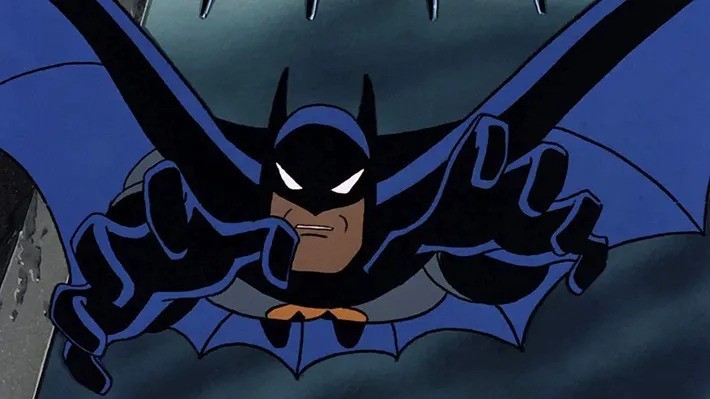
One of the most revolutionary aspects of Batman: The Animated Series was its visual design. The creators made a bold decision to paint on black paper instead of white, giving the show its signature dark, atmospheric look. This wasn’t just a stylistic flourish. It was a declaration of intent. Gotham was meant to feel oppressive, elegant, and timeless, a city that existed somewhere between the 1940s and the future.
The art deco influences, elongated shadows, and minimalist backgrounds created a cinematic experience rarely seen in television animation. Every frame felt composed, deliberate, and moody. Batman himself was often depicted as a silhouette first and a character second, reinforcing the mythic quality of the Dark Knight. This visual restraint allowed emotional moments to breathe. Silence, darkness, and stillness became storytelling tools rather than empty space.
This approach reshaped expectations for animated superhero shows. Suddenly, cartoons didn’t need to be hyperactive to be engaging. They could be quiet, stylish, and contemplative, and still hold an audience’s attention.
Kevin Conroy and the Definitive Voice of Batman
No discussion of the series is complete without acknowledging Kevin Conroy’s performance as Batman and Bruce Wayne. Before Conroy, Batman’s voice was often portrayed as exaggerated or theatrical. Conroy introduced a subtle duality that became instantly iconic. His Bruce Wayne sounded warm, approachable, and human, while his Batman voice was controlled, restrained, and quietly intimidating.
This distinction added layers to the character that live-action films hadn’t yet fully explored. You could hear the emotional cost of Batman’s mission in Conroy’s delivery. He wasn’t angry for the sake of intimidation. He was focused, burdened, and deeply disciplined. That vocal performance shaped how audiences understood Batman’s psychology and influenced nearly every portrayal that followed.
Conroy’s voice acting elevated animation itself. It proved that voice performances in cartoons could be nuanced, internal, and emotionally complex, setting a new standard across the industry.
Villains Who Felt Tragically Human
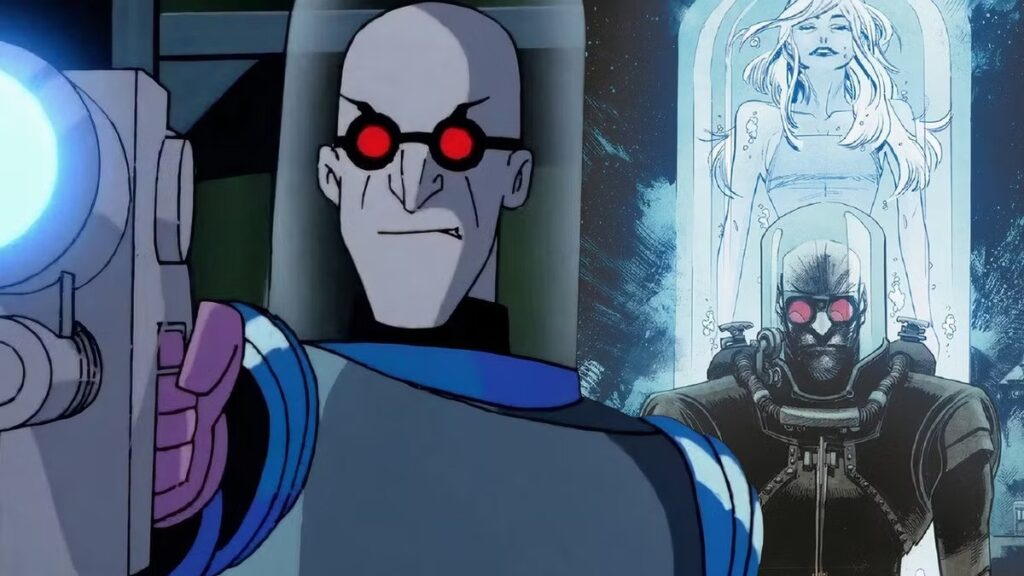
What truly cemented Batman: The Animated Series as a groundbreaking work was its treatment of villains. Instead of one-dimensional antagonists, the show presented deeply flawed, often tragic individuals whose stories mirrored Batman’s own pain.Characters like Mr. Freeze, Two-Face, and Clayface weren’t evil for entertainment’s sake. They were victims of circumstance, obsession, and loss.
The episode centered on Mr. Freeze’s origin is often cited as one of the finest pieces of animated storytelling ever created. His love for his wife Nora, his emotional isolation, and his quiet despair transformed him from a gimmicky villain into a heartbreaking figure. This reimagining became so definitive that it permanently altered the character in comics and other media.
Harley Quinn, an original creation for the show, is another testament to its narrative power. Introduced as a comedic sidekick to the Joker, she gradually evolved into a complex character shaped by abuse, loyalty, and identity struggles. Her popularity and eventual transition into mainstream comics and films trace directly back to the emotional depth the series gave her.
The Joker as a Force of Chaos, Not Comedy
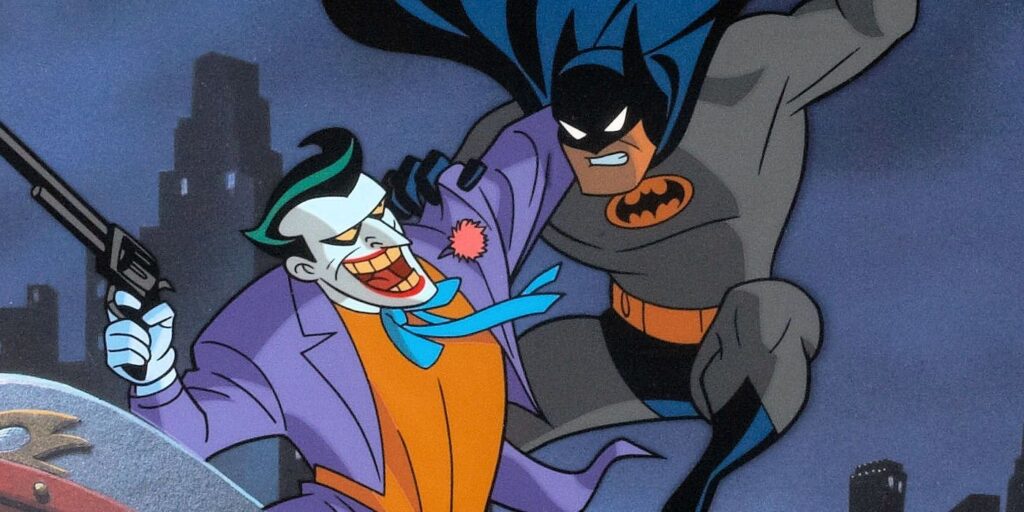
Mark Hamill’s Joker was another defining element that helped redefine superhero cartoons. While previous animated Jokers leaned heavily into slapstick humor, this version balanced comedy with genuine menace. Hamill’s performance was playful and terrifying in equal measure, capable of switching from laughter to cruelty in a single breath.
The show understood that the Joker wasn’t just Batman’s opposite, but his reflection. Their relationship was built on obsession rather than simple hero-versus-villain dynamics. Episodes often explored the unsettling truth that Batman and the Joker needed each other to define their identities. This psychological tension added a layer of maturity rarely seen in animated series at the time.
By allowing the Joker to be funny without undermining his danger, the show demonstrated how animation could handle tonal complexity without confusing its audience.
Storytelling That Embraced Moral Ambiguity
Unlike many cartoons of its era, Batman: The Animated Series wasn’t afraid of moral gray areas. Batman didn’t always win cleanly, and justice didn’t always feel satisfying. Some villains escaped. Some tragedies couldn’t be undone. The show acknowledged that doing the right thing often came with emotional costs.
Episodes frequently ended on quiet, reflective notes rather than triumphant conclusions. Batman would stand alone on a rooftop, contemplating the limits of his mission. These moments humanized him more than any action sequence ever could. He wasn’t an invincible hero. He was a man constantly confronting the consequences of his choices.
This narrative maturity helped reshape how superhero stories were written across animation and live-action media. It proved that audiences were ready for stories that respected complexity over simplicity.
A Soundtrack That Elevated Emotion
The music of Batman: The Animated Series, composed primarily by Shirley Walker, played a crucial role in its emotional impact. Instead of relying on repetitive background cues, the series used orchestral scores that felt operatic and cinematic. The music carried weight, often expressing emotions characters couldn’t articulate aloud.
The opening theme alone set a new benchmark. It told a complete story without dialogue, using visuals and music to establish tone, character, and mood. Throughout the series, the score heightened tension, underscored tragedy, and added elegance to action scenes.
This commitment to high-quality music reinforced the idea that animated shows deserved the same artistic respect as films. It also influenced how future animated series approached sound design and scoring.
Why the Series Still Feels Timeless Today
Decades later, Batman: The Animated Series hasn’t aged in the way many of its contemporaries have. Its themes remain relevant, its visuals remain striking, and its storytelling continues to resonate with new audiences. Part of this longevity comes from its refusal to chase trends. By grounding itself in universal human struggles like grief, obsession, and identity, the show transcended its era.
Modern superhero cartoons and even blockbuster films still draw inspiration from its approach. The emphasis on character psychology, atmosphere, and emotional stakes can be traced directly back to this series. It didn’t just entertain. It educated an entire generation of creators on what the genre could achieve.
For many fans, this version of Batman isn’t just one interpretation among many. It is the definitive one.
A Legacy That Redefined the Medium
Batman: The Animated Series didn’t simply raise the bar for superhero cartoons. It rebuilt it entirely. It demonstrated that animation could be serious without being cynical, dark without being hollow, and accessible without being shallow. It respected its audience and trusted them to engage with complexity, sadness, and ambiguity.
By focusing on character over spectacle and emotion over noise, the series permanently altered the landscape of animated storytelling. Its influence can be felt in countless shows that followed, from superhero narratives to dramatic animated series aimed at adults.
In redefining what a cartoon could be, Batman: The Animated Series didn’t just change Batman. It changed animation itself, forever.